
Mesa water damage
Water damage restoration in Mesa, AZ
The wet spot tells you where damage is visible. Paul Davis Greater Phoenix helps Mesa property owners connect that observation with source investigation, material assessment and a practical plan for restoration.
Call for urgent damage. Online requests are non-urgent.
A clearer starting point
- Share the leak history, including earlier repairs.
- Ask how affected materials will be evaluated.
- Keep source repair and restoration connected.
Start with the evidence
A better leak history makes the assessment more useful.
You do not need to diagnose the cause before calling. Describe what you actually noticed, and separate that from what you suspect.
When it appeared
Note when the stain, dripping or wet floor was first observed. Describe any rain, appliance use or plumbing work around that time without assuming those events caused the damage.
Where it changed
Identify affected rooms and any change in the visible area. Photographs taken from a safe location can help document what was apparent on a particular day.
What has been done
Share plumber findings, previous repair records and whether water has been isolated. Tell the team if the same location has been repaired or repainted before.
Follow the findings
Trace the problem before closing the repair.
Use these stages to understand what is known, what needs checking and what supports the next decision.
Choose a stage to exploreObserve
Record the starting condition.
Connect your observations with the areas requiring assessment.
Provide the timeline and any previous repair information. Ask the team to distinguish confirmed findings from suspected pathways that still need investigation.
Evaluate
Define the affected materials.
Review the evidence behind the proposed drying or removal.
Ask where measurements or additional access are needed. A single reading should be explained in its material and location context, rather than treated as a universal verdict for the whole property.
Recheck
Resolve outstanding questions.
Bring source correction and material evaluation together.
Before finish repairs are arranged, review any remaining moisture concerns, inaccessible areas and source repairs. Confirm who will address each open item and what the repair proposal includes.
The best next step follows what the assessment establishes, with unresolved questions kept visible.
02 / What to know
Map the materials that need attention.
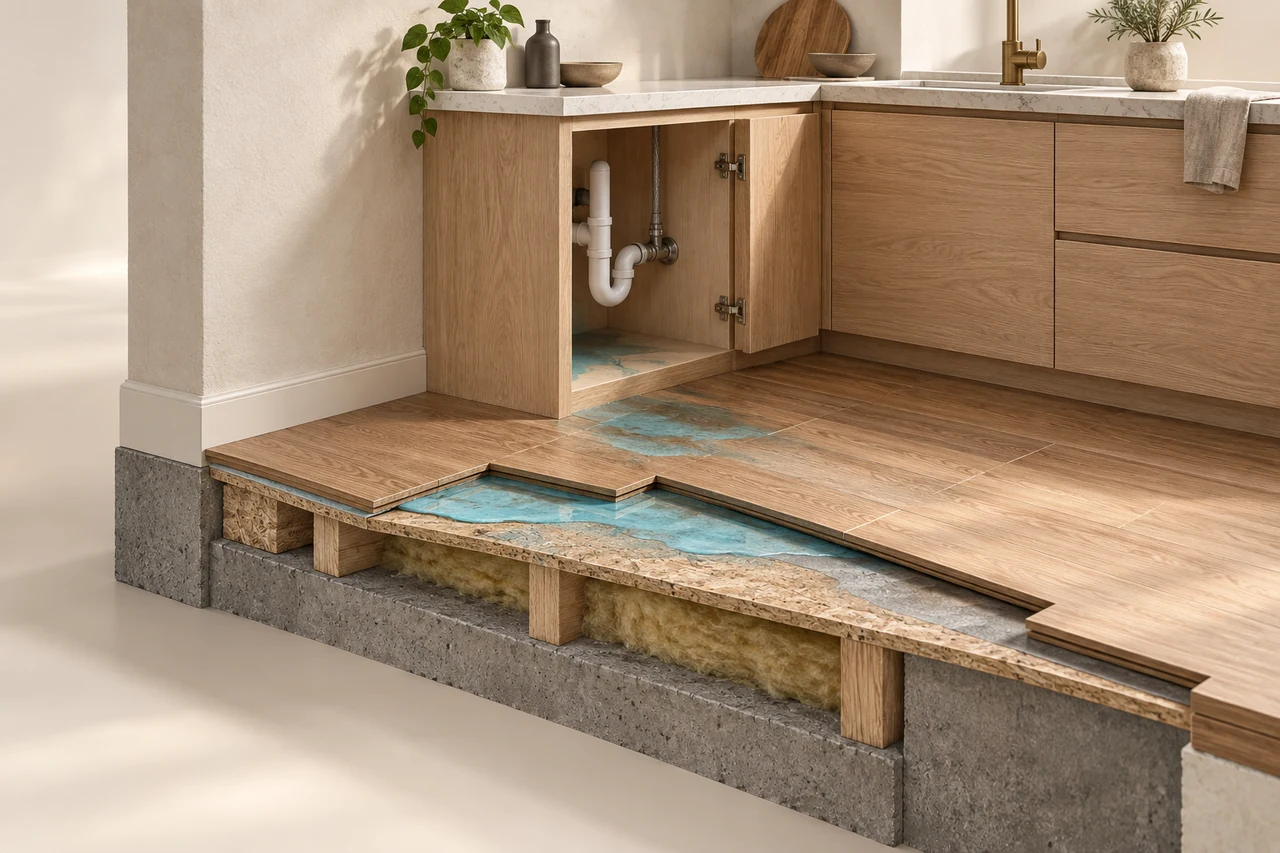
A room label such as “kitchen” is helpful for access; the restoration scope needs more detail. Flooring, trim, cabinetry and walls may require different treatment. Moisture measurements help evaluate materials and monitor drying. Accessible standing water may require extraction before the remaining moisture is addressed.
The assessment should explain which materials are proposed for drying, which require removal and where access is still needed. Keep those findings with the scope. If an opening reveals additional damage, the record should show how the new finding changes the work.
Keep the handoffs clear
Repair the source. Restore the damage.
Source correction
A plumber, roofer or other appropriate professional may need to resolve the leak. Confirm who is responsible, what remains uncertain and how completion will be communicated to the restoration team.
Affected-property work
Extraction removes accessible water. A drying plan addresses retained materials, while removal and repair address damage that cannot be resolved that way. Confirm which tasks depend on source correction, further access or authorization.
Useful answers
Before the next step.
Can you help if I do not know where the water came from?
Call 602-278-8837 and explain what you can see. Tell us whether the water is active and any recent changes. The initial discussion can help identify the assessment and source-repair coordination needed.
Does a moisture reading prove the cause of the leak?
A reading describes a condition at the tested location. Ask how it fits with observations, history and other findings. Identifying a source may require a separate plumbing, roofing or building-system assessment.
Will every wet wall need to be removed?
Not automatically. Material condition and the water involved affect the decision. Ask which materials are proposed for drying in place or removal and what findings support that recommendation.
What if the same stain keeps returning?
Share the earlier repair history and dates of recurrence. Ask for a review of unresolved moisture sources before another finish repair. If mold is suspected, discuss a separate mold assessment rather than painting over the area.
Paul Davis · Greater Phoenix
Let’s talk about
your property.
Tell us what happened. We’ll discuss the restoration help you need and the next step.
Call for urgent damage. Online requests are non-urgent.