
Wait for safe access.
Follow local emergency instructions and avoid floodwater, damaged utilities and unstable building materials. Never walk or drive through flooded areas. Tell the team if access is restricted or utilities may be affected.
Cleanup starts with the water source.
Floodwater is different from a contained clean-water leak. The water source, how long materials stayed wet and the extent of damage influence the scope.
Water and debris removal
Assess affected rooms and discuss removal needs.
Contaminated materials
Evaluate what can be cleaned and what requires removal.
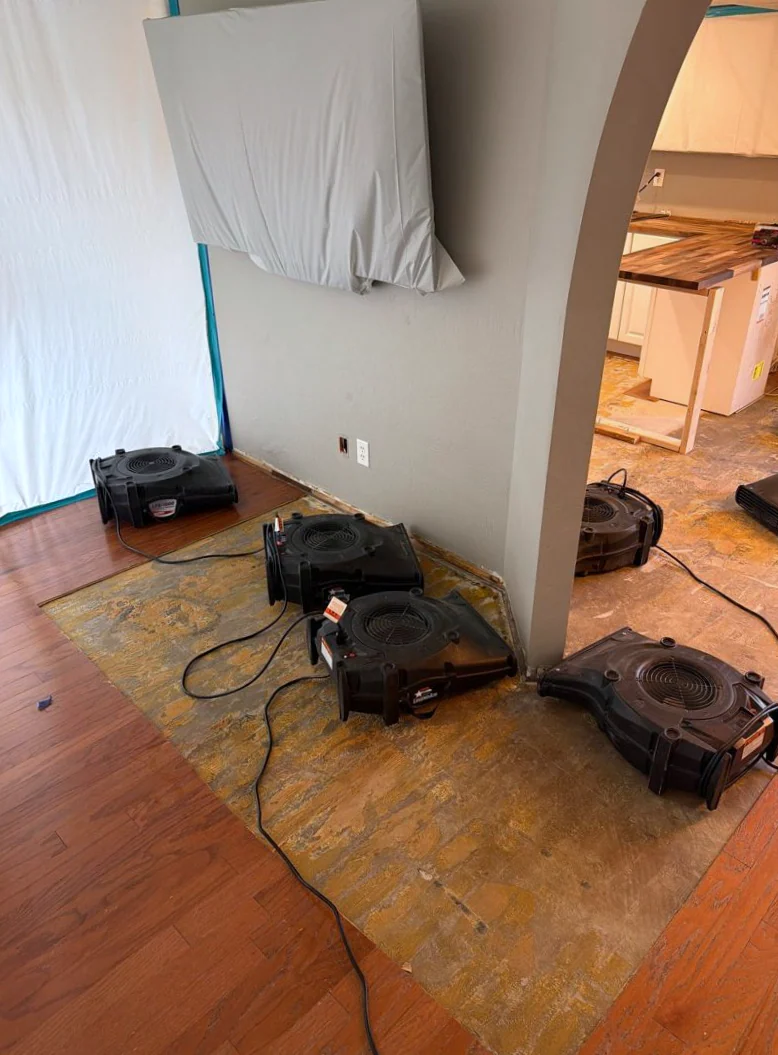
Drying and moisture evaluation
Address wet building materials before planning finishes and repairs.
Contents and reconstruction
Discuss belongings separately from the building repair scope.
Information that helps the team prepare
Share whether the water came from outside, a drain or another source. Note the affected rooms, whether water remains and any access concerns. Photograph damage only from a safe location and ask your insurer what records to keep.
Plan cleanup around the water source and affected materials.
Water entering from outdoors raises different questions from a small indoor supply-line leak. Share what you know about how water entered, how far it reached and whether the source is still active. Keep away from floodwater and electrical hazards. Follow public safety restrictions, even when the water level appears lower. Our Greater Phoenix team can discuss assessment and restoration after access can be arranged; a receding water level does not by itself establish that entry is appropriate.
Describe the route water took
Mention the entrance, doorway, wall opening or other location where water was first noticed. Identify rooms, closets and storage areas that may have been affected, including spaces that are no longer visibly wet. Do not remove building materials to trace the path yourself. Ask what the assessment needs to establish about the source, contamination concerns and moisture in surrounding materials before a cleanup approach is proposed.
Separate extraction from material decisions
Removing standing water is one part of a flood-restoration discussion. Flooring, wall materials, cabinets and belongings need evaluation based on their condition and the water involved. Ask which materials are proposed for removal, cleaning or drying and why. The answer can differ across the same room. A clean-looking surface does not resolve the questions about an assembly or material that was exposed to floodwater.
Coordinate the occupied parts of the property
Tell the project contact whether anyone is still using adjoining areas and who manages access to the building. For a rental or managed property, identify the owner or authorized representative. Ask about work-area boundaries, equipment placement and restrictions during the proposed work. Keep children and pets away from affected areas. Decisions about using a damaged space require the actual conditions to be evaluated rather than a general assumption.
Keep source correction and repairs connected
Ask what is known about the entry point and which work addresses the building materials inside. Temporary protection, permanent source repair, drying and reconstruction may require separate decisions. Review any proposed finish replacement after the assessment and keep optional improvements clearly described. Ask your insurer about the policy provisions that apply to the cause of loss. Restoration guidance does not establish insurance coverage or promise payment for a particular repair.
A clear view of insurance responsibilities.
Coverage, deductibles and payment depend on your policy, the cause of the damage and your insurer’s decision. We can provide damage documentation and restoration information. Ask your carrier to explain your coverage and claim requirements.
More about restoration and insuranceA few useful answers
Your questions, answered.
Is outdoor flooding covered like a burst pipe?
Not necessarily. Standard homeowners policies generally exclude flood damage. Coverage depends on the policy and cause of loss; ask your carrier about any flood policy and its requirements.
Can I use wet appliances or electronics?
Do not use equipment that may be electrically unsafe. Ask the appropriate qualified professional to evaluate it before use.
Will every wet item need to be thrown away?
No single rule fits every item. Contamination, material and condition affect whether cleaning is appropriate. Arrange an assessment and ask about documentation before disposal when safe.