
Start with an agreed repair scope.
Ask which areas and materials are included, what the estimate covers and which approvals are still needed. Additional damage, selections or site conditions can affect the plan.
Damage-related repairs
Identify the work needed because of the documented loss.
Material choices
Discuss available selections, availability and decisions that affect the work.
Optional improvements
Keep remodeling choices separate from the damage repair scope and insurance decisions.
Make the handoff from mitigation clear.
Before repairs begin, discuss what has been completed, whether moisture or other conditions still need attention and who your contact will be during reconstruction.
Review the work and remaining questions.
At completion, compare the work with the agreed scope. Bring any unfinished items or concerns to the project contact and ask about applicable care information or warranty documents. Terms depend on the work and agreement.
Reconstruction, one visible stage at a time
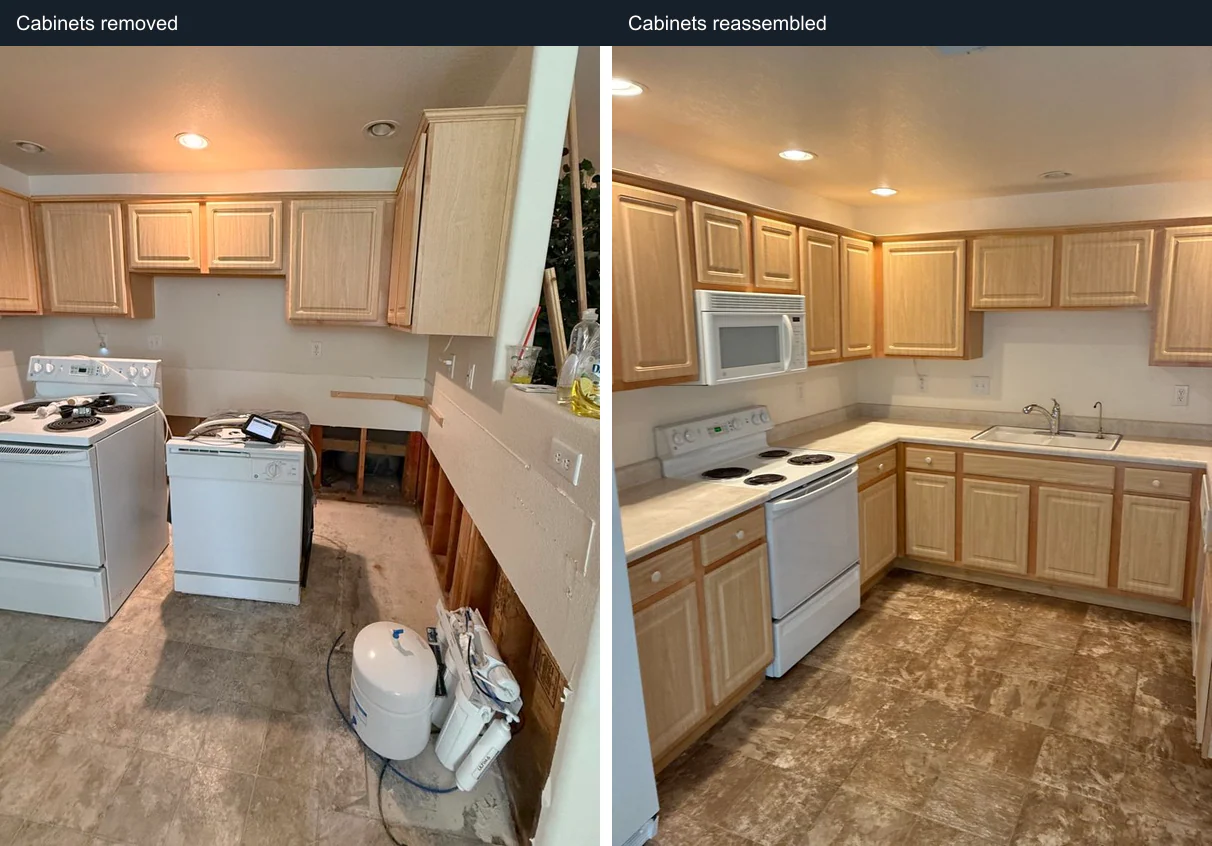
Compare documented repair stages from Greater Phoenix homes, including wall finishes and kitchen cabinetry.
A Phoenix stairwell wall, before and after repair

Scottsdale kitchen reconstruction: cabinets return
A clear view of insurance responsibilities.
Coverage, deductibles and payment depend on your policy, the cause of the damage and your insurer’s decision. We can provide damage documentation and restoration information. Ask your carrier to explain your coverage and claim requirements.
More about restoration and insuranceA few useful answers
Your questions, answered.
Is reconstruction included in every restoration job?
No. Some losses need cleanup and drying only. Others require repairs to damaged materials. The assessment and proposed scope determine the work.
Can I make upgrades during repairs?
Discuss optional improvements separately with the team. Changes can affect cost, scheduling and insurance reimbursement; approval should be clear before the work is added.