
Chandler water damage
Water damage restoration in Chandler, AZ
When water interrupts a workplace or an occupied property, priorities compete. Paul Davis Greater Phoenix helps Chandler owners and managers connect damage restoration with access, essential activities and the decisions needed for repairs.
Call for urgent damage. Online requests are non-urgent.
A clearer starting point
- Identify critical spaces and operational contacts.
- Review safe access before planning continued use.
- Track restoration and reopening as separate decisions.
Occupied-building planning
Tell us what the property needs to keep doing.
Water damage restoration in Chandler should begin with the affected areas and the activities that depend on them. The same discussion helps a business, managed property or home office.
Critical spaces
Identify the reception area, workstations, stockroom, equipment room or essential household workspace. Explain the consequence of losing access without assuming an area can remain occupied.
Key contacts
Name the owner or facility manager, the person who can authorize work and relevant IT or equipment specialists. Clarify who will communicate access changes to occupants.
Time-sensitive commitments
Share operating hours, deliveries and scheduled appointments. These details inform the access discussion; the assessment still determines the work and restrictions required.
From interruption to repair planning
Plan the next usable space.
These stages organize the conversation about an occupied property. They do not promise uninterrupted operations or a fixed completion date.
Choose a stage to explorePrioritize
Explain the essential activities.
Identify what is affected and who needs to make decisions.
List the spaces and systems your operation relies on. Give the project contact access details and the names of specialists responsible for affected business equipment or utilities.
Coordinate
Review the restoration arrangement.
Connect equipment and work boundaries with property access.
Ask where people can go, what must be relocated and when access is required for checks. Confirm how changes will be shared with staff, residents or visitors.
Transition
Review readiness with the right people.
Bring drying findings, repairs and operational needs together.
Confirm remaining work with the restoration team and relevant property or system professionals. Moving equipment out is one event; returning an area to its intended use may have additional requirements.
A restoration schedule becomes more useful when every dependency has a responsible contact.
02 / What to know
Connect the restoration work to property access.
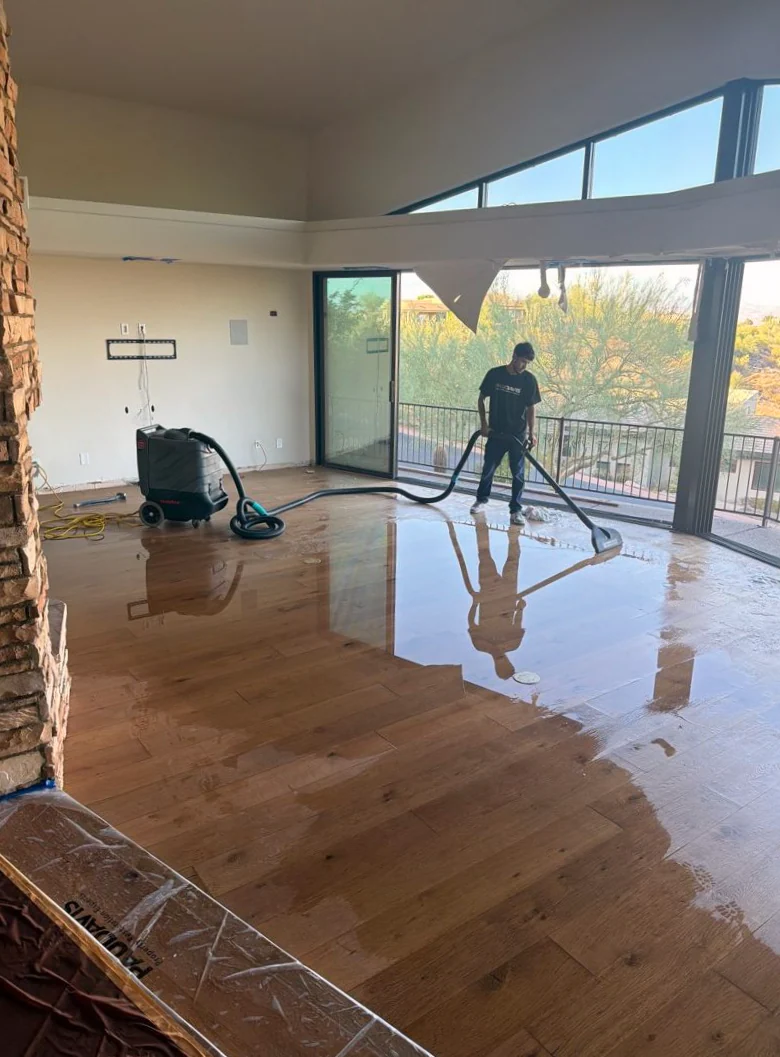
Extraction, material drying and repair visits use the space in different ways. Drying may involve air movement, dehumidification and repeated checks of affected materials. Removal may be needed for materials that cannot be retained. Review equipment locations, work boundaries and the access needed for each part of the scope.
Where the conditions allow phased work, connect each phase to the activities it affects. Staff, residents and visitors need clear access instructions. Reopening arrangements should follow the relevant property findings, repairs and approvals.
Keep the project legible
Separate property records from business records.
Restoration documents
Retain the affected-area assessment, authorized scope, project communications and changes. Ask which tasks are complete, which are underway and which depend on another decision.
Operational records
Keep your own records of displaced activities, equipment concerns and temporary arrangements. Your insurer or adviser can explain the documentation relevant to your policy; the restoration scope does not decide coverage.
Useful answers
Before the next step.
Can my business stay open during restoration?
Possibly, but the answer depends on hazards, affected areas and proposed work. Discuss safe separation and alternative arrangements during assessment. Do not assume that work in one room leaves every other activity unaffected.
Should I turn wet business equipment back on?
Do not operate water-affected electrical equipment until a qualified professional determines it is safe. Tell the restoration team which systems are affected and involve the equipment provider or your technical specialist.
Can the work be divided into phases?
Ask whether phasing is practical for the damage and layout. Access, material condition and the required sequence may limit the options. Review how a proposed phase affects both restoration and normal property use.
Do you also help Chandler homeowners?
Yes. Call 602-278-8837 about water damage in a home or business. Share affected rooms, active water concerns and access needs. The contact form is available for nonurgent requests.
Paul Davis · Greater Phoenix
Let’s talk about
your property.
Tell us what happened. We’ll discuss the restoration help you need and the next step.
Call for urgent damage. Online requests are non-urgent.